selected work
Nudge
The Brain-Tuning Wearable We Didn’t Know We Needed
Our Role
The Context
Nudge explores what it could mean to intentionally tune cognitive states without surgery, implants, or clinical equipment. Built around low-frequency ultrasound, an emerging method for modulating brain activity, the prototype asks how a powerful technology might feel approachable enough to live on a bathroom counter, ready for the rhythm of everyday use.
Making Neurotech Feel Everyday
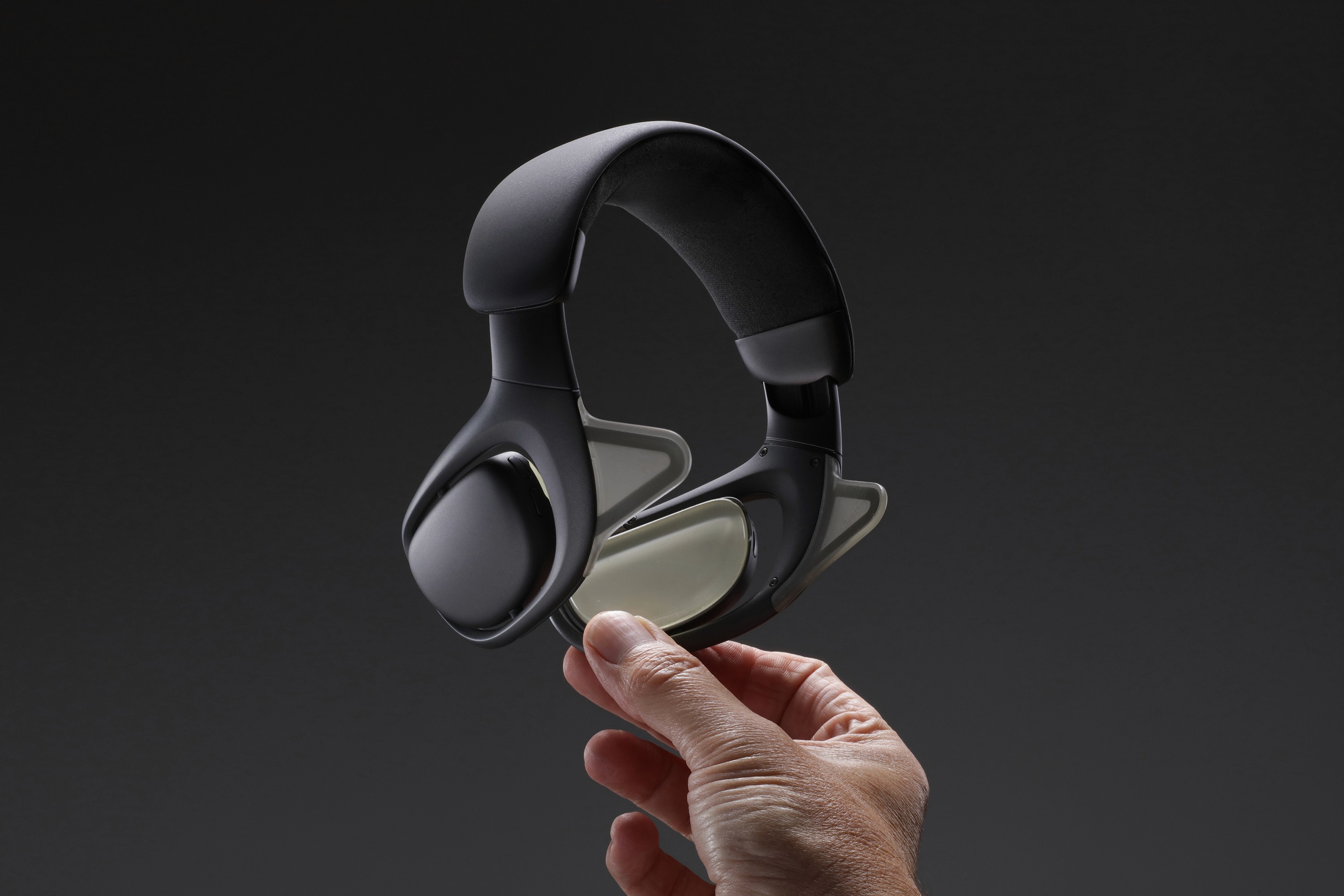
The project moves brain-adjacent technology away from the language of labs and medical instruments. Instead of looking cold or clinical, the headset reads as a refined consumer wearable: structured, minimal, and deliberately familiar enough to imagine using before a meeting, before bed, or during a morning routine.
Making Neurotech Feel Everyday
The project moves brain-adjacent technology away from the language of labs and medical instruments. Instead of looking cold or clinical, the headset reads as a refined consumer wearable: structured, minimal, and deliberately familiar enough to imagine using before a meeting, before bed, or during a morning routine.
Making Neurotech Feel Everyday
The project moves brain-adjacent technology away from the language of labs and medical instruments. Instead of looking cold or clinical, the headset reads as a refined consumer wearable: structured, minimal, and deliberately familiar enough to imagine using before a meeting, before bed, or during a morning routine.
A Softer Language for Powerful Tools
By steering clear of the visual cues of medical equipment, Nudge argues that neurotechnology can be personal, wearable, and calm without losing credibility. Soft surfaces, restrained forms, and a precise material language help the concept feel less like a procedure and more like an object that belongs in daily life.
A Softer Language for Powerful Tools
By steering clear of the visual cues of medical equipment, Nudge argues that neurotechnology can be personal, wearable, and calm without losing credibility. Soft surfaces, restrained forms, and a precise material language help the concept feel less like a procedure and more like an object that belongs in daily life.
A Softer Language for Powerful Tools
By steering clear of the visual cues of medical equipment, Nudge argues that neurotechnology can be personal, wearable, and calm without losing credibility. Soft surfaces, restrained forms, and a precise material language help the concept feel less like a procedure and more like an object that belongs in daily life.

Designing to Fold Away
Everyday products spend as much time being carried and stored as they do being used. The folding wing architecture reduces the overall size of the wearable, allowing it to pack neatly for transport without sacrificing comfort or performance.
Designing to Fold Away
Everyday products spend as much time being carried and stored as they do being used. The folding wing architecture reduces the overall size of the wearable, allowing it to pack neatly for transport without sacrificing comfort or performance.
Designing to Fold Away
Everyday products spend as much time being carried and stored as they do being used. The folding wing architecture reduces the overall size of the wearable, allowing it to pack neatly for transport without sacrificing comfort or performance.

Designing From Anatomy
Rather than treating the head as a simple surface, we studied the underlying anatomy that the technology needed to interact with. Using anatomical references and cross-sectional models of the skull, we identified the regions where ultrasound transducers would have the thinnest cross section of skull to travel through. These insights became a key input into the industrial design, informing the placement, geometry, and overall architecture of the wearable. By allowing anatom - not convention - to guide the design, we created a product whose form was intrinsically connected to its function.
Designing From Anatomy
Rather than treating the head as a simple surface, we studied the underlying anatomy that the technology needed to interact with. Using anatomical references and cross-sectional models of the skull, we identified the regions where ultrasound transducers would have the thinnest cross section of skull to travel through. These insights became a key input into the industrial design, informing the placement, geometry, and overall architecture of the wearable. By allowing anatom - not convention - to guide the design, we created a product whose form was intrinsically connected to its function.
Designing From Anatomy
Rather than treating the head as a simple surface, we studied the underlying anatomy that the technology needed to interact with. Using anatomical references and cross-sectional models of the skull, we identified the regions where ultrasound transducers would have the thinnest cross section of skull to travel through. These insights became a key input into the industrial design, informing the placement, geometry, and overall architecture of the wearable. By allowing anatom - not convention - to guide the design, we created a product whose form was intrinsically connected to its function.


The Impact
Awards
2
Awards
2
Prototype Iterations
18
Prototype Iterations
18
Weeks From Concept to Prototype
11
Weeks From Concept to Prototype
11
The Impact
Work With Us
If you’re looking to collaborate on a project, develop innovative human-machine interfaces, or bring a concept to life—let’s talk.
Join the Team
If you thrive on solving complex problems, designing at the intersection of hardware and software, and pushing boundaries—email us.
Office
3435 Cesar Chavez St,
San Francisco
Let’s Build the Future Together
© 2025 Card79. All rights reserved.
Terms of service
Privacy Policy
Work With Us
If you’re looking to collaborate on a project, develop innovative human-machine interfaces, or bring a concept to life—let’s talk.
Join the Team
If you thrive on solving complex problems, designing at the intersection of hardware and software, and pushing boundaries—email us.
Office
3435 Cesar Chavez St,
San Francisco
Let’s Build the Future Together
© 2025 Card79. All rights reserved.
Terms of service
Privacy Policy
Work With Us
If you’re looking to collaborate on a project, develop innovative human-machine interfaces, or bring a concept to life—let’s talk.
Join the Team
If you thrive on solving complex problems, designing at the intersection of hardware and software, and pushing boundaries—email us.
Office
3435 Cesar Chavez St,
San Francisco
Let’s Build the Future Together
© 2025 Card79. All rights reserved.
Terms of service
Privacy Policy